1. Warm-up - Sound Ball - keeps you spontaneous and in the moment, it's about giving and receiving ideas, letting the ideas and sounds be connected to each other, it's great for letting go of planning, letting go of editing.
2. Script writing and practicing
3. Process Journal entry
Wednesday, October 21, 2015

Monday, October 19, 2015
October 20
 |
| http://i.ytimg.com/vi/fWuB3ysTae8/hqdefault.jpg |
1. Statement of Artistic Intention Due October 20 - end of period 1
Task: Open your Drama Process Journal and write a 1 page Statement of Artistic Intent that includes the following:
What you are going to do,
Why you are going to do it,
What you want to audience to know or learn,
How you are going to do it.
* You may use the template on the back of the rubric to help develop your ideas. You are NOT limited by this template. It is merely another tool for you to utilize.
2. Continue working on your sit-coms.
Wednesday, October 14, 2015
October 15
|
| http://i.ytimg.com/vi/fWuB3ysTae8/hqdefault.jpg |
1. Statement of Artistic Intention Due October 20 - end of class Preparation
Task: Open your Drama Process Journal and write a 1 page Statement of Artistic Intent that includes the following:
What you are going to do,
Why you are going to do it,
What you want to audience to know or learn,
How you are going to do it.
* You may use the template below to help develop your ideas. You are NOT limited by this template. It is merely another tool for you to utilize.
Why are you doing this piece?
- What ideas explored throughout the unit and your individual research (including technical theatre) do you intend to further explore in developing your performance concept to a point of realization?
What message/theme do you want to convey when presenting this piece?
- What is the main message/theme you wish to communicate in your performance?
- What lasting impact do you want your performance to have on your audience?
- Why do you think it is important to communicate this message/theme to your ‘targeted’ audience?
What production elements will you use to present the piece effectively?
- How do you intend to work with the "production elements" to help communicate your ideas?
What performance elements will you include to effectively communicate your message/theme?
- How do you intend to work with the "performance elements" to help communicate your ideas?
Monday, October 12, 2015
October 12
1. Warm-up The exaggeration circle is a good warm-up to work on taking something small and heightening it. It's good to learn about taking a small idea and making it bigger. It is also a physical warm-up.
2. Script writing and scene practice
3. Process Journal entry
Criterion C - Statement of Artistic Intention - October 14 in class writing assignment
2. Script writing and scene practice
3. Process Journal entry
Criterion C - Statement of Artistic Intention - October 14 in class writing assignment
Wednesday, October 7, 2015
October 8
2. Script writing

3. Pay special attention to the format of the script (How to format a script) https://blogger.googleusercontent.com/img/b/R29vZ2xl/AVvXsEgre-f80pjhCdsZBAc1axlnN29vsXPpAGA8YDCHC-treiC5BDwlxMTPTR42AHNnbNBsqCZJNusf9ttdZMuUApyhUYFzGZlz4G4Aj4iXfZSnX0yefCZ_Alt8d6tkr9_nOAk9dpf9nKfxGA8N/s1600/SCRIPT-FORMAT.jpg

(How to write a play) http://www.wikihow.com/Write-a-Play-Script
4. Process Journal - Write a journal entry at the end of class. (What did you learn today? How did it affect you? How will you use this information? etc.)
Saturday, October 3, 2015
October 6
Good Morning Year 10, our lineup for today is as follows:
1. Watch "Shape" video
2. Warm up exercise
3. Get into groups and
Script writing-Before you write the script for your sit-com pilot, there are a few things you need to know and do.
a. Brainstorm - Take notes, create mind-maps, etc to document this process.
b. Write a plot idea and the basics of an outline of the script. Remember that you are writing a sit-com pilot. Look at your Commedia dell'Arte characters. Who will be whom? What kind of scene will you create? What will the basic story line be? What acting techniques will you use?
c. Develop a relationship map (who's who, and how is everyone related?)
Your presentation should be about 8-10 minutes. It will be video-taped.
This work will help prepare you to write your Statement of Artistic Intention.
4. Write a process journal entry at the end of class. (What did you learn today? How did it affect you? How will you use this information? etc.) Try to focus on Criterion B (developing skills) and Criterion C (thinking and ideas).
1. Watch "Shape" video
2. Warm up exercise
Follow Your Nose
A movement exercise for the whole group. Move around the room, filling up the space, changing pace, changing direction, being aware of other people but not touching them. Now become aware of your nose. Let your nose lead you around the room. Follow it wherever it goes!
Develop this by focusing on different parts of the body, so that participants begin to discover new ways of moving. Very useful for dance or physical theatre, or simply for discovering movement ideas for characters. Try being led by your stomach, your little toe, your knee, your back and so on.
| Learning Objectives: | To develop physical movement To cooperate in group work |
| Age Group: | 6+ |
| Participants: | Whole group |
| Recommended time for activity: | 10-15 minutes |
3. Get into groups and
a. Brainstorm - Take notes, create mind-maps, etc to document this process.
b. Write a plot idea and the basics of an outline of the script. Remember that you are writing a sit-com pilot. Look at your Commedia dell'Arte characters. Who will be whom? What kind of scene will you create? What will the basic story line be? What acting techniques will you use?
c. Develop a relationship map (who's who, and how is everyone related?)
 |
| http://www.thefrisky.com/wp-content/uploads/2012/02/24/madmencrop_022412_m-600x450.jpg |
Your presentation should be about 8-10 minutes. It will be video-taped.
This work will help prepare you to write your Statement of Artistic Intention.
4. Write a process journal entry at the end of class. (What did you learn today? How did it affect you? How will you use this information? etc.) Try to focus on Criterion B (developing skills) and Criterion C (thinking and ideas).
Thursday, October 1, 2015
October 1
Is it necessary to submit all your assessment tasks? How are you graded?
1. The History of Commedia dell'Arte. Let's watch this little video which was produced by an IB student;)
2. Let's talk a bit about what you have learned so far about Commedia dell'Arte . . .
3.
Script writing-Before you write the script for your sit-com pilot, there are a few things you need to know and do.
a. Brainstorm - Take notes, create mind-maps, etc to document this process.
b. Write a plot idea and the basics of an outline of the script. Remember that you are writing a sit-com pilot. Look at your Commedia dell'Arte characters. Who will be whom? What kind of scene will you create? What will the basic story line be? What acting techniques will you use?
c. Develop a relationship map (who's who, and how is everyone related?)
Your presentation should be about 8-10 minutes. It will be video-taped.
This work will help prepare you to write your Statement of Artistic Intention.
4. Write a process journal entry at the end of class. (What did you learn today? How did it affect you? How will you use this information? etc.) Try to focus on Criterion B (developing skills) and Criterion C (thinking and ideas).
1. The History of Commedia dell'Arte. Let's watch this little video which was produced by an IB student;)
2. Let's talk a bit about what you have learned so far about Commedia dell'Arte . . .
3.
Script writing-Before you write the script for your sit-com pilot, there are a few things you need to know and do.
a. Brainstorm - Take notes, create mind-maps, etc to document this process.
b. Write a plot idea and the basics of an outline of the script. Remember that you are writing a sit-com pilot. Look at your Commedia dell'Arte characters. Who will be whom? What kind of scene will you create? What will the basic story line be? What acting techniques will you use?
c. Develop a relationship map (who's who, and how is everyone related?)
|
| http://www.thefrisky.com/wp-content/uploads/2012/02/24/madmencrop_022412_m-600x450.jpg |
Your presentation should be about 8-10 minutes. It will be video-taped.
This work will help prepare you to write your Statement of Artistic Intention.
4. Write a process journal entry at the end of class. (What did you learn today? How did it affect you? How will you use this information? etc.) Try to focus on Criterion B (developing skills) and Criterion C (thinking and ideas).
Thursday, September 24, 2015
September 29
1. In your Process Journal reflect on the following: What do you laugh at? Who do you laugh at? What do you think is funny?
2. Warm up - The shake out is a classic, basic warm-up that gets people energized.
3. Stock Characters Work Sheet - to be completed this morning in class.
4. Journal entry.
2. Warm up - The shake out is a classic, basic warm-up that gets people energized.
3. Stock Characters Work Sheet - to be completed this morning in class.
4. Journal entry.
Tuesday, September 22, 2015
September 24
1. Submit Worksheet 1
2. Start Worksheet 2 - Stock Characters
3. Process Journal entry. (What did you learn today? How did it affect you? How will you use this information? etc.)
Homework: What do you laugh at? Who do you laugh at? What do you think is funny? Think about these questions and be prepared to reflect on this in your Process Journal.
Monday, September 21, 2015
September 22
Good Morning Year 10.
Lesson Goal: 1) Practice risk-taking; 2) Continue to research Commedia dell'Arte
1. Complete Process Journal entry from last class.
2. Let's warm up!
Horseshoe is a game designed to help people get used to "messing up" in front of each other, and getting focused in the moment. It promotes risk-taking and playing with commitment. (10 minutes)
2. Explore Criterion (Criterion Defined page at top of blog)
3. Continue research: Worksheet 1 due September 24 - paper version (beginning of class)
4. Remember to keep your process journal up-to-date. Write an entry at the end of each class. Include the date. Include the criterion (A, B, C, D) (What did you learn today? How did it affect you? How will you use this information? etc.)
Lesson Goal: 1) Practice risk-taking; 2) Continue to research Commedia dell'Arte
1. Complete Process Journal entry from last class.
2. Let's warm up!
Horseshoe is a game designed to help people get used to "messing up" in front of each other, and getting focused in the moment. It promotes risk-taking and playing with commitment. (10 minutes)
2. Explore Criterion (Criterion Defined page at top of blog)
3. Continue research: Worksheet 1 due September 24 - paper version (beginning of class)
4. Remember to keep your process journal up-to-date. Write an entry at the end of each class. Include the date. Include the criterion (A, B, C, D) (What did you learn today? How did it affect you? How will you use this information? etc.)
Wednesday, September 16, 2015
September 17
Good Morning, Year 10
1. Living an emotion . . .
Notes from video:
* 7 Universal emotions: joy, grief, fear, anger, surprise, love, laughter (people display these emotions in a similar way)
* Emotions scale
* An emotion brings you on to a scene
* Live the emotion as you
2. Continue research: Worksheet 1 due September 23 (beginning of class). I need a paper version.
3. Write a journal entry at the end of class. (What did you learn today? How did it affect you? How will you use this information? How will it help you become a better actor/actress? etc.)
Monday, September 14, 2015
September 15
Our first exercise in babble speech was a good way to start the day.
2. Let's complete our Commedia dell'Arte today;)
3. Process Journal entry (let's look again at Criterion Defined)
You should produce a journal entry for each class. Remember to include the criterion that you are addressing.
Wednesday, September 9, 2015
September 10
Year 10, today's lesson:
1. Warm-up: Woosh, Bang, Pow (energy and commitment)
http://putlocker.is/watch-modern-family-tvshow-season-1-episode-1-online-free-putlocker.html
3. Write an entry in your Process Journal. *Remember to include the criterion
1. Warm-up: Woosh, Bang, Pow (energy and commitment)
2. Let's watch the Modern Family pilot (season 1, episode 1), then discuss
 |
| http://i1.huffpost.com/gen/1373218/thumbs/n-MODERN-FAMILY-CATCHUP-large570.jpg |
http://putlocker.is/watch-modern-family-tvshow-season-1-episode-1-online-free-putlocker.html
3. Write an entry in your Process Journal. *Remember to include the criterion
Monday, September 7, 2015
September 8
Welcome to MYP Drama at OIS. This term you will be studying Commedia dell'Arte
1. What is comedy? What makes something funny? There are no rules as comedy is subjective.
During this term you will begin your journey to explore comedy as an art form and, hopefully, laugh all along the way.
2. Let's look at what we will be doing this term. . .
3. But, what is Commedia dell'Arte?
4. How can we get used to working together in this environment? How can we learn techniques that will help us? Warm-up exercises are useful tools that allow students to learn about and practice techniques that help them develop as actors. Let's try one!
Warm up exercise: I'm cool and so are you if . . . (used with new groups to share with each other and learn about each other)
5. Before we go, let's vogue . . .
Strike a pose!
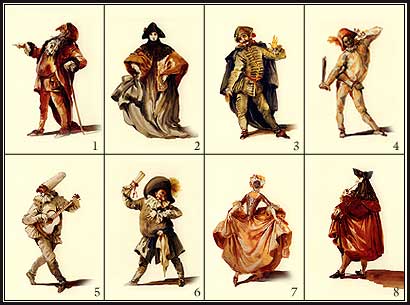 |
| http://chucklewithsomething.files.wordpress.com/2012/05/comm-del-cast.jpg |
1. What is comedy? What makes something funny? There are no rules as comedy is subjective.
During this term you will begin your journey to explore comedy as an art form and, hopefully, laugh all along the way.
2. Let's look at what we will be doing this term. . .
3. But, what is Commedia dell'Arte?
4. How can we get used to working together in this environment? How can we learn techniques that will help us? Warm-up exercises are useful tools that allow students to learn about and practice techniques that help them develop as actors. Let's try one!
Warm up exercise: I'm cool and so are you if . . . (used with new groups to share with each other and learn about each other)
5. Before we go, let's vogue . . .
Strike a pose!
Sunday, June 14, 2015
June 17, 19, 24
Acting auditions for teens
http://www.ace-your-audition.com/acting-auditions-for-teens.html
Monologues
It's your turn. Choose one of the scripts, prepare it and deliver it.
June 10 holiday
 |
| Add https://celiaforhomes.files.wordpress.com/2014/06/banner-dia-de-portugal.jpgcaption |
June 10 - Day of Portugal
June 12 - Let's tie up loose ends. Final day to submit work.
June 3, 5
 |
| http://static.uk.groupon-content.net/56/44/1298981204456.jpg |
Final performance
Criterion A - 1 page response
June 5
Exams
Tuesday, May 26, 2015
May 27, 29
 |
| http://www.stowe.com/wp-content/uploads/2014/05/263theater_2.jpg |
2. It's showtime. Let's perform!
Wednesday, May 20, 2015
May 20, 22
 |
| https://c2.staticflickr.com/6/5284/5302642789_31cef06d57_m.jpg |
Good morning, Year 10.
1. Statement of artistic intention. You have 30 minutes to complete a statement of artistic intention.
Write a 1 page Statement of Artistic Intent that includes the following:
What you are going to do,
Why you are going to do it, What you want to audience to know or learn,
How you are going to do it.
* You may use the template below to help develop your ideas. You are NOT limited by this template. It is merely another tool for you to utilize.
Why are you doing this piece?
- What ideas explored throughout the unit and your individual research (including technical theatre) do you intend to further explore in developing your performance concept to a point of realization?
What message/theme do you want to convey when presenting this piece?
- What is the main message/theme you wish to communicate in your performance?
- What lasting impact do you want your performance to have on your audience?
- Why do you think it is important to communicate this message/theme to your ‘targeted’ audience?
What production elements will you use to present the piece effectively?
- How do you intend to work with the "production elements" to help communicate your ideas?
2. Rehearsal
3. Process Journal Entry
Thursday, May 14, 2015
May 15

Farm Kings - a reality show
According to Wikipedia,
"Family Dynamics
- Lisa King (Divorced Mom): Mother of 10 children, Runs Boldy’s Family Bakery, She grows and sells fresh cut flowers for the family business and for weddings, Family calls her "Mama Bear Lisa"
- Joe King: Oldest of the 10 children, CEO of Freedom Farms, Makes all the decisions always looking for new ways to improve and expand the farm & graduated from Penn State as a Civil Engineer [2]
- Elizabeth “Bitty” King is the only girl, helps her mom Lisa out at the family Bakery, took a year off and moved away from the farm to get away from the stressful family business and moved back to be a part of Freedom Farms as she is very close to her family
- Tim King is in charge of planting and tending to all of the crops, is referred to as the “Plant Doctor”, and is very stubborn, persevering and very strong willed
- Pete King is known as the “Human Harvester”, does everything from tending to the chickens, is a field hand and does sales and is very outgoing
- Dan King is referred to as the “Utility Man”. He is in charge of the farmer’s markets and helps out his brothers when they need an extra hand on a job
- Luke King is the “Brains of the Family”, is one of the family members to go to college. He hopes to become a doctor someday and is a quick learner
- Sam King likes to think that he is the “Big Man on Campus”, is determined to succeed, and is starting to take on more responsibility when it comes to harvesting the crops
- John King is the “Joker” of the family, lightens the mood when there is tension within the family, is not a complainer and will do whatever his brothers tell him to do
- Paul King is very helpful and up for any challenge, is 100% committed to farming
- Ben King is the youngest, has Down syndrome, works alongside his brothers, and “No one treats him differently because he has special needs”
Year 10, look at the above characterizations. Incorporate this structure into your work. You can keep this information at the beginning of your script and/or in your Process Journal.
Tuesday, May 12, 2015
May 13, 15
1. Warm-up The exaggeration circle is a good warm-up to work on taking something small and heightening it.
2. Script writing and scene practice
3. Process Journal entry
2. Script writing and scene practice
3. Process Journal entry
Thursday, May 7, 2015
May 8
Good Morning, Year 10
1. Warm up - Walk, walk, walk
2. Script writing
 http://d13s5ta1qg2cax.cloudfront.net/wp-content/uploads/screenplay.jpg
3. Pay special attention to the format of the script (How to format a script) https://blogger.googleusercontent.com/img/b/R29vZ2xl/AVvXsEgre-f80pjhCdsZBAc1axlnN29vsXPpAGA8YDCHC-treiC5BDwlxMTPTR42AHNnbNBsqCZJNusf9ttdZMuUApyhUYFzGZlz4G4Aj4iXfZSnX0yefCZ_Alt8d6tkr9_nOAk9dpf9nKfxGA8N/s1600/SCRIPT-FORMAT.jpg
(How to write a play) http://www.wikihow.com/Write-a-Play-Script
4. Process Journal - Write a journal entry at the end of class. (What did you learn today? How did it affect you? How will you use this information? etc.)
1. Warm up - Walk, walk, walk
2. Script writing
3. Pay special attention to the format of the script (How to format a script) https://blogger.googleusercontent.com/img/b/R29vZ2xl/AVvXsEgre-f80pjhCdsZBAc1axlnN29vsXPpAGA8YDCHC-treiC5BDwlxMTPTR42AHNnbNBsqCZJNusf9ttdZMuUApyhUYFzGZlz4G4Aj4iXfZSnX0yefCZ_Alt8d6tkr9_nOAk9dpf9nKfxGA8N/s1600/SCRIPT-FORMAT.jpg
(How to write a play) http://www.wikihow.com/Write-a-Play-Script
4. Process Journal - Write a journal entry at the end of class. (What did you learn today? How did it affect you? How will you use this information? etc.)
Wednesday, May 6, 2015
Drama Groups
Group 1
Sofia, Matilde, Julia, Gonçalo, Arthur
Group 2
Benedita, Jeanne, Félix, Ethan, Matthew
Group 3
Yan Yan, Joana, Susana, Marcus
Sofia, Matilde, Julia, Gonçalo, Arthur
Group 2
Benedita, Jeanne, Félix, Ethan, Matthew
Group 3
Yan Yan, Joana, Susana, Marcus
Tuesday, May 5, 2015
May 6
1. Warm-up
2. Now, let's divide into groups (drum roll please . . .)
3. Pay special attention to the format of the script (How to format a script) https://blogger.googleusercontent.com/img/b/R29vZ2xl/AVvXsEgre-f80pjhCdsZBAc1axlnN29vsXPpAGA8YDCHC-treiC5BDwlxMTPTR42AHNnbNBsqCZJNusf9ttdZMuUApyhUYFzGZlz4G4Aj4iXfZSnX0yefCZ_Alt8d6tkr9_nOAk9dpf9nKfxGA8N/s1600/SCRIPT-FORMAT.jpg
(How to write a play) http://www.wikihow.com/Write-a-Play-Script
4. Process Journal entry.
 |
| https://blogger.googleusercontent.com/img/b/R29vZ2xl/AVvXsEi3S2tBDnLBgX37HUmizr_xWDJsEmb-_GzyStyhQ0ttkARbsp1WiR1NYvvHIxdr2syXEYb8EFXYyLB-oEHRzE7u0MQaMQL0sQ1hMNhQarwJZ2hlFqO8tx_74fdMqhf9B7So9fo-SOhaulUI/s1600/Drama+Warmup.jpg |
3. Pay special attention to the format of the script (How to format a script) https://blogger.googleusercontent.com/img/b/R29vZ2xl/AVvXsEgre-f80pjhCdsZBAc1axlnN29vsXPpAGA8YDCHC-treiC5BDwlxMTPTR42AHNnbNBsqCZJNusf9ttdZMuUApyhUYFzGZlz4G4Aj4iXfZSnX0yefCZ_Alt8d6tkr9_nOAk9dpf9nKfxGA8N/s1600/SCRIPT-FORMAT.jpg
(How to write a play) http://www.wikihow.com/Write-a-Play-Script
4. Process Journal entry.
Tuesday, April 28, 2015
April 28
1. Warm up - The shake out is a classic, basic warm-up that gets people energized.
2. Stock Characters Work Sheet - to be completed this morning in class.
3. Journal entry.
2. Stock Characters Work Sheet - to be completed this morning in class.
3. Journal entry.
Thursday, April 23, 2015
April 23
Good Morning Year 10. We have lots to do so let's get started;)
1.
Grammelot is babble speech. This can be a very effective means of communication. Watch the video to learn a little more about this technique. Is language always necessary to communicate with others?
2. Next, Worksheet #2 - Stock Characters
Use the link below and follow the instructions on the worksheet:
https://app.box.com/s/nlzolgur15ahcqo90cj949hhiwr0hwk6
3. Process Journal entry
1.
Grammelot is babble speech. This can be a very effective means of communication. Watch the video to learn a little more about this technique. Is language always necessary to communicate with others?
2. Next, Worksheet #2 - Stock Characters
Use the link below and follow the instructions on the worksheet:
https://app.box.com/s/nlzolgur15ahcqo90cj949hhiwr0hwk6
3. Process Journal entry
Tuesday, April 21, 2015
April 22
Good Morning, Year 10
1. Living an emotion . . .
Notes from video:
* 7 Universal emotions: joy, grief, fear, anger, surprise, love, laughter (people display these emotions in a similar way)
* Emotions scale
* An emotion brings you on to a scene
* Live the emotion as you
2. Continue research: Worksheet 1 due April 21 (end of class)
3. Write a refection at the end of class. (What did you learn today? How did it affect you? How will you use this information? etc.)
Thursday, April 16, 2015
April 17
1. Warm Up - builds and focuses on energy, commitment and pacing.
2. Continue research
3. Reflect in Process Journal
Should we change the due date on the research? Let's talk. . .
2. Continue research
3. Reflect in Process Journal
Should we change the due date on the research? Let's talk. . .
Tuesday, April 14, 2015
April 15
Good Morning Year 10, our lineup for today is as follows:
1. Unit of work - goals, expectations
2. Explore blog
3. Watch "Shape" video
4. Warm up exercise
5. Begin research
6. Reflect in Process Journal
1. Unit of work - goals, expectations
2. Explore blog
3. Watch "Shape" video
4. Warm up exercise
Follow Your Nose
A movement exercise for the whole group. Move around the room, filling up the space, changing pace, changing direction, being aware of other people but not touching them. Now become aware of your nose. Let your nose lead you around the room. Follow it wherever it goes!
Develop this by focussing on different parts of the body, so that participants begin to discover new ways of moving. Very useful for dance or physical theatre, or simply for discovering movement ideas for characters. Try being led by your stomach, your little toe, your knee, your back and so on.
| Learning Objectives: | To develop physical movement To cooperate in group work |
| Age Group: | 6+ |
| Participants: | Whole group |
| Recommended time for activity: | 10-15 minutes |
5. Begin research
6. Reflect in Process Journal
Tuesday, March 24, 2015
March 25, 27
Welcome to MYP Drama at OIS. This term you will be studying Commedia dell'Arte
1. What is comedy? What makes something funny? There are no rules as comedy is subjective.
During this term you will begin your journey to explore comedy as an art form and, hopefully, laugh all along the way.
2. Let's look at what we will be doing this term. . .
3. But, what is Commedia dell'Arte?
4. How can we get used to working together in this environment? How can we learn techniques that will help us? Warm-up exercises are useful tools that allow students to learn about and practice techniques that help them develop as actors. Let's try one!
Warm up exercise: I'm cool and so are you if . . . (used with new groups to share with each other and learn about each other)
5. Decorate your Process Journal
6. Answer this question: What do I hope to accomplish this term in Drama class?(Criterion C)
7. Make a entry about today's lesson. (Video on Commedia dell'Arte - Criterion A, Warm-up exercise - Criterion B)
8. Before we go, let's vogue . . .
Strike a pose!
|
| http://chucklewithsomething.files.wordpress.com/2012/05/comm-del-cast.jpg |
1. What is comedy? What makes something funny? There are no rules as comedy is subjective.
During this term you will begin your journey to explore comedy as an art form and, hopefully, laugh all along the way.
2. Let's look at what we will be doing this term. . .
3. But, what is Commedia dell'Arte?
4. How can we get used to working together in this environment? How can we learn techniques that will help us? Warm-up exercises are useful tools that allow students to learn about and practice techniques that help them develop as actors. Let's try one!
Warm up exercise: I'm cool and so are you if . . . (used with new groups to share with each other and learn about each other)
5. Decorate your Process Journal
6. Answer this question: What do I hope to accomplish this term in Drama class?(Criterion C)
7. Make a entry about today's lesson. (Video on Commedia dell'Arte - Criterion A, Warm-up exercise - Criterion B)
8. Before we go, let's vogue . . .
Strike a pose!
Subscribe to:
Posts (Atom)